The best boxing gloves for you depend on the sessions you attend and how the gloves fit your hands. A well-known brand or a high review score can help you choose which models to look at, but neither tells you whether the thumb position or wrist fastening will feel comfortable.
Bag gloves, training gloves and sparring gloves
For bag and pad work, you need a glove intended for that use, with a secure fastening and a hand compartment you can close comfortably. Many general training gloves are sold for both activities. The product name alone can be vague, so read the model description and check your gym’s requirements.
Sparring involves a partner, which makes the condition and suitability of the padding especially important. Clubs commonly specify permitted glove weights and may require a separate pair for sparring. A glove that has spent months hitting a heavy bag should be assessed by the coach before it is used with another boxer.
Competition gloves follow the rules of the event, and may be supplied by the organiser. Your club can tell you what you need; an ordinary training-glove purchase should not be based on competition weight alone.
What the ounce weight tells you
The 10 oz, 12 oz, 14 oz and 16 oz labels describe glove weight. They do not form a universal small-to-large sizing system. Within a range, a heavier model may have different padding or dimensions, but manufacturers vary in how they construct their gloves.
Choose the weight required for your training, then check the fit of that particular model. Going down an ounce size just to tighten the hand compartment can leave you with the wrong glove for your class.
How a glove should feel
Try both gloves with your usual wraps. Your fingers should sit naturally, your thumb should not be forced into an awkward position, and you should be able to form a fist without fighting the glove. Fasten the wrist cuff and check that the glove does not rotate or slide around your hand.
Pressure across the knuckles, a thumb pressed against the end or a fastening that only just overlaps are reasons to try another shape. The glove size guide includes a checklist for smaller and broader hands.
Fastenings, materials and maintenance
Hook-and-loop cuffs are easy to fasten without help and suit classes where gloves come on and off frequently. Lace-up designs offer a different adjustment system but normally need another person to fasten them. Neither choice compensates for a poorly fitting hand compartment.
Synthetic and leather gloves both vary in construction quality. Look at the stitching, lining, cuff and care instructions as well as the outer material. After training, open the cuffs, wipe the outside and allow the gloves to dry in a ventilated place. Leaving wet wraps inside them makes the lining harder to dry.
Recommended training gloves
These options have hook-and-loop fastenings and are available in several weights. Each product page identifies the version linked from this site.
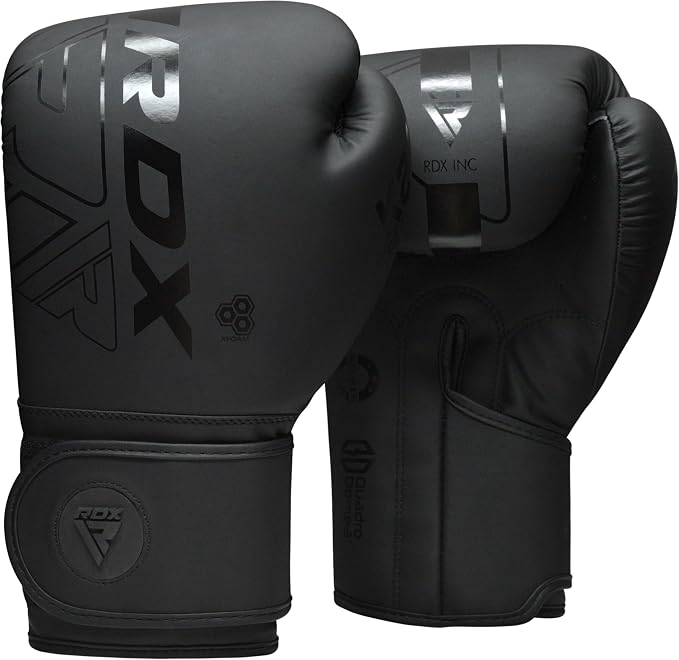
RDX KARA training gloves — 12 oz black
RDX KARA training gloves with an attached thumb, ventilated palm and hook-and-loop cuff. This version is 12 oz in black.
View product ↗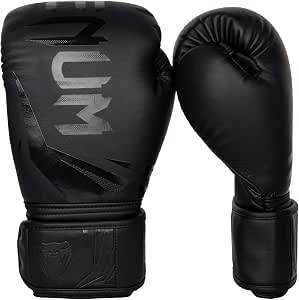
Venum Challenger 3.0 gloves — 10 oz black/black
Venum Challenger 3.0 gloves with triple-density foam, an attached thumb and a broad wrist fastening. This version is 10 oz in black/black.
View product ↗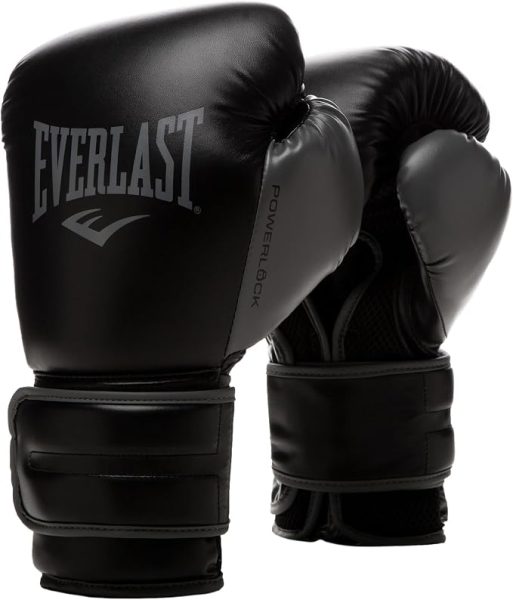
Everlast Powerlock boxing gloves – 14 oz black
Everlast Powerlock gloves with a synthetic outer, layered foam padding and a turnback wrist strap. This version is 14 oz in black.
View product ↗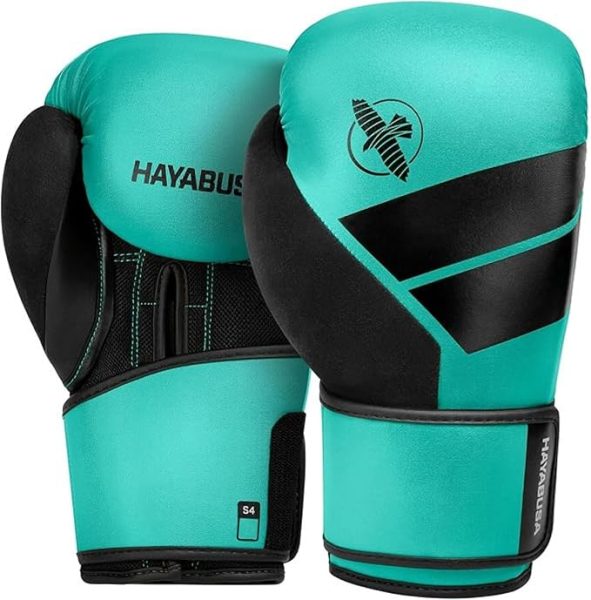
Hayabusa S4 boxing gloves – 16 oz teal
Hayabusa S4 gloves with a pre-curved hand pocket, mesh palm and single wrist strap. This pair is 16 oz in teal.
View product ↗