Boxing shoes are designed for movement on suitable indoor training surfaces. Their shape, sole and ankle height differ from ordinary trainers, but you do not necessarily need a pair for your first class. Ask the gym what footwear it allows and whether specialist shoes would be useful for the sessions you attend.
When boxing shoes become useful
If you train regularly in the ring or spend a lot of time on footwork drills, boxing shoes may be worth trying. They are a more specific purchase than general gym trainers, so think about where you will wear them. A class that combines running, weight training and boxing may call for different footwear across those activities.
Do not assume boxing shoes are suitable for outdoor running or every gym floor. Check the manufacturer’s intended use and the club’s surface before buying.
Getting the length and width right
Measure both feet using the brand’s instructions and consult the size chart for the actual model. UK, EU and US conversions can differ between manufacturers. Your usual trainer size is a useful reference, but it is not a guarantee.
Try the shoes with the socks you train in. Check for pressure across the forefoot, rubbing around the heel and discomfort at the toes. Lace them properly before deciding, because a loosely fastened shoe can hide heel movement or make the fit seem wider than it is.
If the length feels right but the sides squeeze, look for a different width or model. Simply buying a longer shoe can leave excess space at the toes while failing to solve the width problem.
Low, mid and high tops
A taller boot covers more of the ankle and lower leg, while a lower cut can be quicker to put on and may feel less restrictive. The useful question is how comfortably you can move in that particular shoe.
Check where the upper bends, whether the tongue stays in place and whether the laces or collar create pressure. A high ankle does not by itself guarantee injury protection, so choose the cut for fit and the training requirements rather than that assumption.
Checking the sole
Inspect the grip pattern and read which surfaces the shoe is intended for. During an indoor fitting, move through the stance and gentle footwork you have been taught. You should not have to fight the shoe to turn, and the heel should not lift excessively inside it.
Keep boxing shoes for the appropriate indoor surface where possible. Grit and outdoor wear can damage the sole and bring dirt into the ring. Let the shoes dry between sessions and check the sole edges, stitching and laces regularly.
Recommended boxing shoes
The LEONE 1947 Hermes is a high-top boot with ankle padding and a rubber sole. The product below links to EU 42 in black; use the manufacturer’s chart to choose your size.
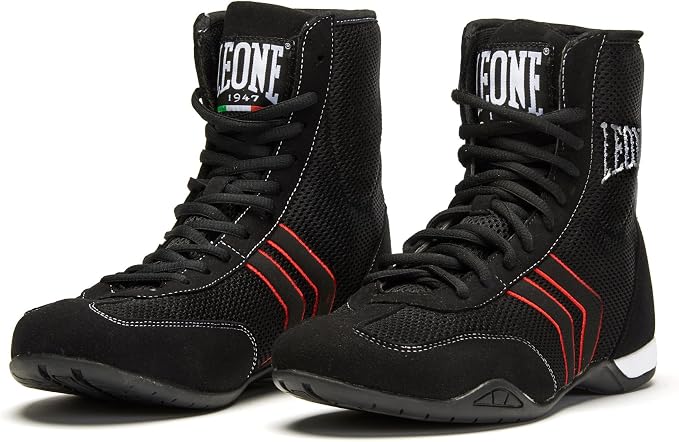
LEONE 1947 Hermes boxing shoes – EU 42 black
High-top boxing shoes with ankle padding, heel reinforcement and a rubber sole. The linked size is EU 42 in black.
View product ↗